The Award
A moon, a rocket and a little magic.

The trophy
The Méliès trophy is a gold moon, half open wireframe and half finished sculpture, with a small rocket crossing in front of it on a slim orbit. One side shows an image still being made and the other shows it complete. The rocket is the filmmaker, travelling from one to the other.

The emblem
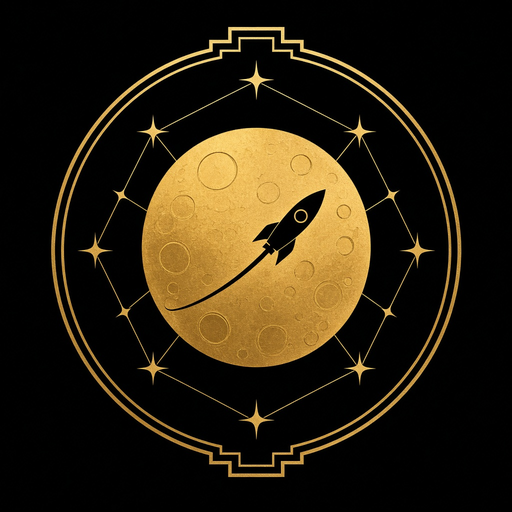
The emblem is the same idea at small scale: a full moon, a rocket crossing it, and a ring of stars joined like a network. It's a nod to Méliès's moon and to the systems that now help us make pictures.
The man behind the name
Georges Méliès (1861–1938) was a Paris stage magician who began making films in 1896 and never looked back. In his glass-walled studio at Montreuil he pioneered many of cinema's first special effects: substitution splices, multiple exposures, dissolves and hand-coloured frames. He made more than 500 films.
His most famous, Le Voyage dans la Lune (A Trip to the Moon, 1902), sends a group of astronomers to the Moon in a shell fired from a giant cannon. The image of the rocket landing in the Moon's eye became one of the best-known pictures in film history.
Méliès used every new tool available to him to make the impossible visible. We think he would have been curious about this one.


Images via Wikimedia Commons.
- A Trip to the Moon, 1902. Public domain.
- The 1902 poster. Public domain.
- Georges Méliès, about 1895. Public domain.
- The space cannon, 1902. Public domain.


The Méliès Awards for AI Cinema are independent. We're not connected to the Méliès International Festivals Federation, whose Méliès d'Or awards honour European fantastic film, or to any company that uses the Méliès name.